
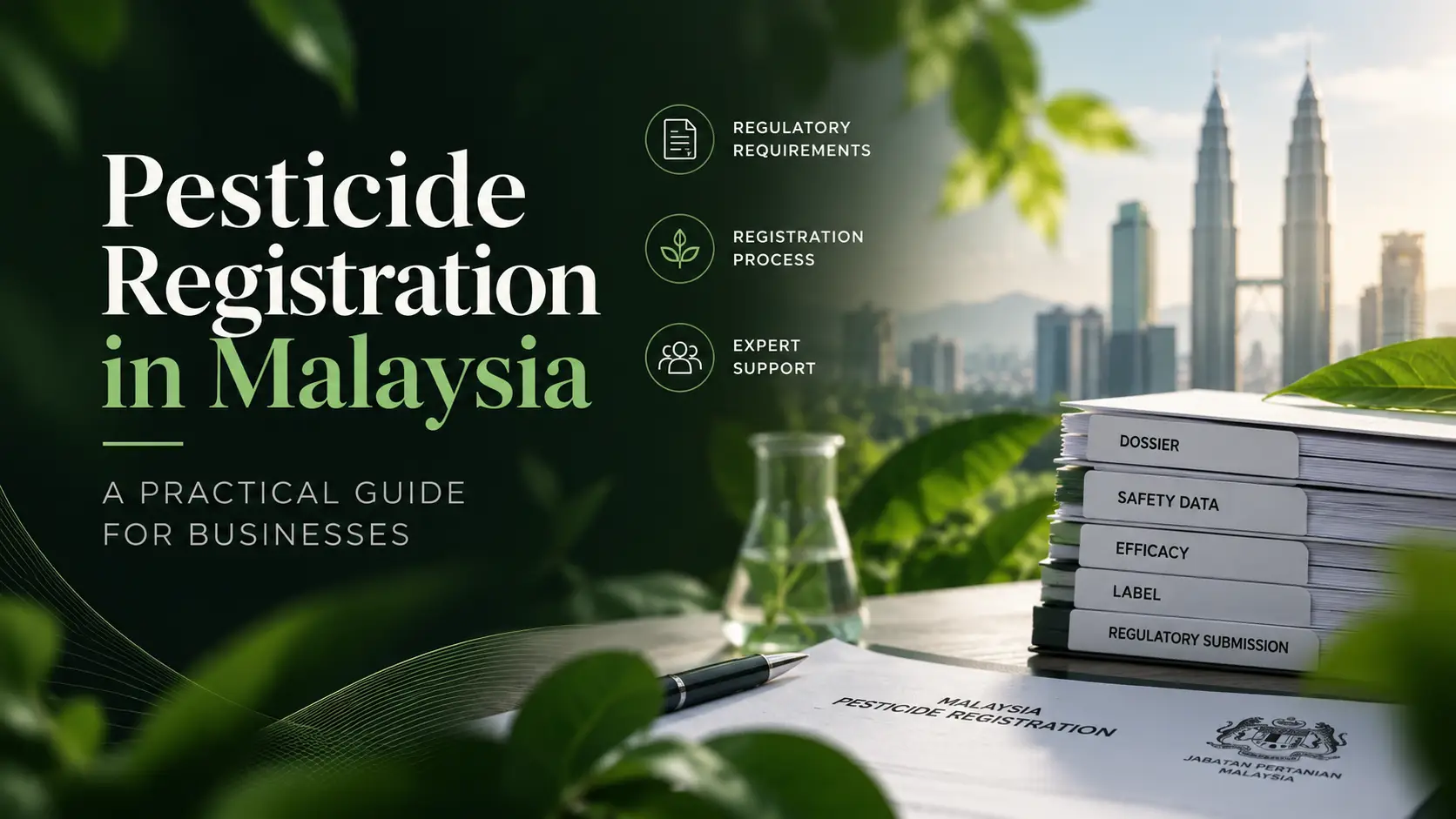
For companies planning to introduce a pesticide product into the Malaysian market, understanding the pesticide registration requirements in Malaysia is an important first step.
The registration process involves more than simply preparing documents for submission. Businesses may need to understand the regulatory pathway, review available product information, identify potential data gaps, prepare the required documentation and coordinate different activities before and during the registration process.
For overseas manufacturers and companies entering Malaysia for the first time, the regulatory landscape can be particularly challenging.
This guide provides an overview of the key areas businesses should consider when planning pesticide registration in Malaysia.
What Is Pesticide Registration in Malaysia?
Pesticide registration is the regulatory process through which pesticide products are submitted for consideration under the applicable requirements of the Pesticide Board, Department of Agriculture Malaysia.
For businesses, registration is an important part of preparing a pesticide product for the Malaysian market.
However, every product may have a different regulatory situation.
The available product data, existing documentation, product characteristics and registration objectives can all affect how a registration project should be approached.
This is why businesses should assess their regulatory position before moving directly into submission.
Why Is Early Regulatory Planning Important?
One of the common challenges in pesticide registration is discovering documentation or data gaps only after the registration process has already started.
Early assessment allows businesses to better understand:
- What information is already available
- What documentation may be required
- Whether potential data gaps exist
- What regulatory pathway may be appropriate
- What additional activities may need to be coordinated
- How the registration project should be planned
A structured assessment at the beginning can therefore help businesses approach the registration process with greater clarity.
For companies unfamiliar with pesticide regulatory requirements in Malaysia, obtaining professional regulatory guidance early can also help them better understand what needs to happen at each stage.
Key Stages of Pesticide Registration in Malaysia
While each project should be assessed according to its specific circumstances, a pesticide registration project may involve several important stages.
1. Pre-Registration Assessment
The first step is understanding the product and the company’s regulatory objectives.
This may include reviewing available product information, existing documentation and the current status of the registration project.
The purpose is to establish a clearer picture of what is available before moving forward.
Key considerations may include:
- Product information
- Existing regulatory documentation
- Available data
- Registration objectives
- Current registration status
- Potential regulatory considerations
2. Dossier Screening and Gap Identification
A registration dossier needs to contain the information required for the relevant regulatory process.
Before submission, available documentation should be reviewed carefully to identify potential gaps or inconsistencies.
This can help businesses understand whether additional information or supporting activities may be required.
A pesticide registration consultant in Malaysia can assist with reviewing available information and identifying potential documentation gaps before the submission stage.
3. Regulatory Strategy
Not every pesticide registration project should be approached in exactly the same way.
Businesses may need to consider the available data, product situation and regulatory requirements before establishing an appropriate registration strategy.
A clear regulatory strategy can help answer questions such as:
- What should be prepared first?
- What information is currently available?
- Are there potential gaps that need to be addressed?
- What activities may need to be coordinated?
- What should be considered before submission?
The objective is to establish a practical pathway based on the specific requirements of the product.
4. Dossier and Label Preparation
Documentation is an important part of the pesticide registration process.
Depending on the project, regulatory support may include activities such as:
- Dossier preparation and review
- Documentation screening
- Data-gap identification
- Label preparation
- Label compliance review
- Supporting documentation
- Regulatory correspondence
Consistency is particularly important.
Information presented across different parts of a registration dossier should be reviewed carefully to help minimise avoidable inconsistencies during the registration process.
5. Submission and Regulatory Management
Preparing a dossier is only one part of the registration journey.
Businesses may also require support with submission activities, regulatory correspondence and communication throughout the registration process.
This is particularly relevant for companies that are unfamiliar with the Malaysian regulatory environment.
Effective registration management involves keeping track of the project, coordinating the relevant activities and maintaining clear communication with the parties involved.
6. Additional Studies and Third-Party Coordination
Some registration projects may require additional testing or studies.
Where this is applicable, businesses may need to coordinate with relevant laboratories, field trialists or other parties.
LEAP GLOBAL’s role is to provide regulatory coordination and support rather than operate as a laboratory.
Depending on the requirements of the project, coordination may involve areas such as:
Field Trial Coordination
Supporting the coordination of relevant field trial activities.
Residue Analysis
Coordinating with appropriate parties when residue analysis is required.
Third-Party Coordination
Working with relevant laboratories, field trialists and other parties involved in the registration project.
The exact requirements depend on the individual registration project and should be assessed accordingly.
7. Registration Approval and Post-Registration Support
Regulatory support does not necessarily end once a registration application has been submitted.
Businesses may also require support with ongoing regulatory matters, including registration renewals, variations, regulatory queries and other post-registration activities.
Having continued regulatory support can help businesses manage these matters more systematically.
What Documents Are Needed for Pesticide Registration in Malaysia?
The documentation required can vary depending on the product and registration circumstances.
Rather than assuming that every product requires exactly the same documentation, businesses should first assess their specific regulatory situation.
A proper pre-registration assessment can help determine:
- What information is already available
- What documents require review
- Whether potential data gaps exist
- What additional information may be required
- What activities may need to be coordinated
This is one reason why pesticide registration support in Malaysia can be valuable for businesses that are unfamiliar with the registration process.
Do Overseas Companies Need a Pesticide Registration Consultant in Malaysia?
For overseas companies entering the Malaysian market, understanding local regulatory requirements can be challenging.
An experienced regulatory consultant can help businesses better understand the Malaysian regulatory pathway and coordinate the activities involved in their registration project.
LEAP GLOBAL supports both local and international companies navigating Malaysian pesticide registration requirements.
Our approach is not simply to prepare documents.
We first seek to understand the product, available data and regulatory objectives before providing guidance based on the specific project.
Common Challenges Businesses Face
1. Starting Without a Clear Regulatory Strategy
Moving directly into documentation without first understanding the regulatory pathway can make the registration process more difficult to manage.
2. Identifying Data Gaps Too Late
Potential documentation or data gaps are easier to address when they are identified early.
3. Inconsistent Information
Different documents need to be reviewed carefully to maintain consistency throughout the registration dossier.
4. Managing Multiple Parties
Some projects may involve laboratories, field trialists and other relevant parties. Coordinating these activities requires proper planning.
5. Unclear Communication
Registration projects can involve multiple stages and regulatory correspondence. Clear communication helps everyone understand what needs to happen next.
How LEAP GLOBAL Supports Pesticide Registration
LEAP GLOBAL is an independent regulatory consultancy specialising in pesticide registration in Malaysia.
Our services cover different stages of the registration journey, including:
Regulatory Strategy & Consultancy
Helping businesses understand their regulatory requirements and plan an appropriate pathway.
Dossier Screening & Gap Analysis
Reviewing available information and identifying potential documentation gaps.
Registration Management
Supporting dossier preparation, submission activities, regulatory correspondence and registration-related matters.
Field Trial & Residue Analysis Coordination
Coordinating with relevant parties when additional studies or testing are required.
Post-Registration Support
Providing support for registration renewals, variations and other ongoing regulatory matters.
Our approach is designed around the specific needs of each project rather than applying the same process to every product.
Preparing for Pesticide Registration in Malaysia
Before beginning a registration project, businesses can start by gathering the information they already have about their product.
Consider preparing:
01 — Product Information
Basic information about the pesticide product and its intended use.
02 — Existing Documentation
Available technical and regulatory documents.
03 — Current Registration Status
Information about any existing registration or previous regulatory activities.
04 — Registration Objectives
What the company is looking to achieve in the Malaysian market.
05 — Available Data
An overview of the information and supporting data currently available.
Having these details ready can help create a clearer starting point for regulatory assessment.
Final Thoughts
Pesticide registration in Malaysia involves more than submitting a collection of documents.
A successful registration project starts with understanding the product, assessing the available information, identifying potential gaps and establishing an appropriate regulatory strategy.
From there, businesses may need to coordinate documentation, submission activities, regulatory correspondence and, where required, additional studies or third-party activities.
For companies entering Malaysia for the first time, particularly overseas manufacturers and product owners, having a clear understanding of the regulatory pathway can make the process easier to navigate.
LEAP GLOBAL provides independent, team-based pesticide regulatory consultancy and registration support in Malaysia, helping businesses understand their requirements and move through the registration process with greater clarity and confidence.
Need Help With Pesticide Registration in Malaysia?
Not sure where to begin?
Tell us about your product, available information and registration objectives. Our regulatory team can help you understand the potential next steps for your project.